

Stainless Steel Work Table vs Base Cabinet: Which Is Better for a Commercial Kitchen?
Compare open-access stainless steel work tables and sliding-door base cabinets by preparation needs, enclosed storage, cleaning access and aisle conditions.
SourcePro Editorial Team
A stainless steel work table and a sliding-door base cabinet can both provide a durable worktop for commercial kitchen activity. The main difference is what happens below that worktop. A work table usually prioritises open access, visible lower space and flexible preparation activity. A base cabinet combines a work surface with enclosed storage for items that need to remain close to a fixed workstation.
Neither option is automatically better for every kitchen. The suitable choice depends on the task at the station, the items that need to be stored, staff movement, aisle conditions, cleaning routines and the confirmed product configuration. Some projects use both products in different areas because they solve different workflow needs.
1. Work Table vs Base Cabinet: The Main Difference
An open-base work table may make sense where staff frequently reach for containers, ingredients or preparation tools. A base cabinet may suit a station where the worktop and the items stored below it need to remain together in one defined position.
2. When a Stainless Steel Work Table Works Better
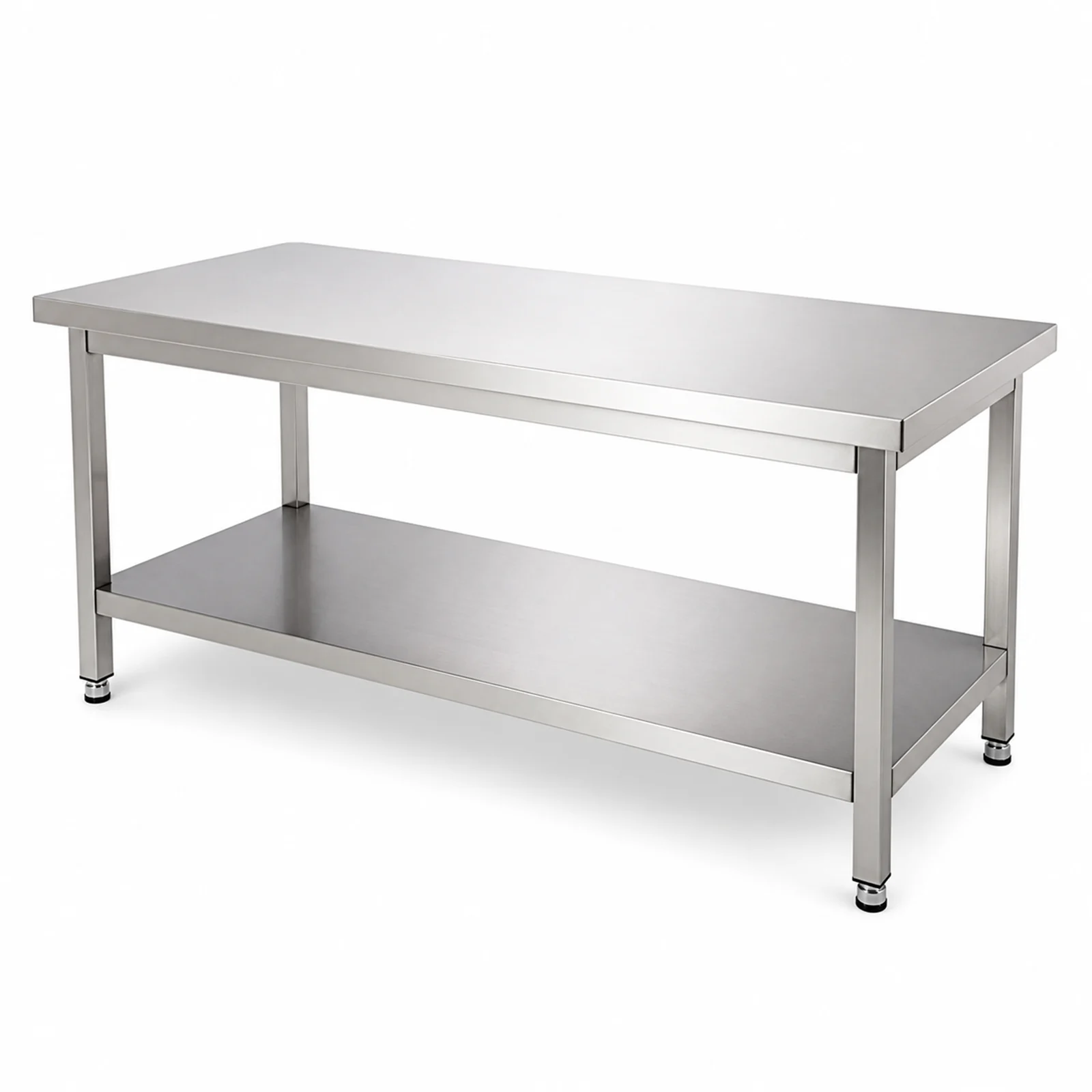
A stainless steel work table can be useful in high-frequency preparation areas where staff need an accessible surface and quick visual checking of the space below it. Depending on the selected configuration, the lower area may be open or include an undershelf for trays, containers or routine supplies.
An open structure can make it easier for staff to approach the table from more than one side, position temporary containers nearby, or adjust how the lower area is used as the task changes. Open access is not an automatic hygiene claim. Cleaning results depend on the actual table structure, installation, floor conditions and routine procedure.
3. When a Sliding Door Base Cabinet Works Better
A sliding-door base cabinet may be more suitable for a fixed workstation that needs enclosed storage directly below the worktop. Tools, containers, packaged supplies or other routine items can be kept close to the point of use while remaining separated from general open activity around the kitchen.
Sliding doors can be relevant where outward-opening cabinet doors would conflict with circulation, adjacent equipment or trolley movement. This does not mean every sliding-door cabinet suits every narrow aisle. Door travel, staff position, cabinet depth, surrounding equipment and actual clearance all need to be reviewed for the project.
4. Open Access vs Enclosed Storage
Open access can support rapid retrieval of frequently used items and makes it easier to see what is stored below the worktop. It can be appropriate where staff move containers in and out during preparation, portioning or temporary staging. However, open storage also requires staff to maintain their own organisation and cleaning routine.
Enclosed storage can reduce the direct exposure of stored items to surrounding kitchen activity. It may be useful where the workstation needs a more controlled storage zone for tools or supplies. The cabinet must still be planned around the actual items being stored, the access pattern and the need to clean the cabinet interior and surrounding floor area.
Staff habits are also relevant. If several people use the same station during different shifts, a defined enclosed storage arrangement may make routine items easier to return to an agreed position. If the station changes task frequently, open access may be more practical. These are workflow considerations rather than universal product rules. Confirm them before finalising the workstation configuration.
5. Cleaning and Floor Visibility
An open work table generally makes it easier to see the floor and lower area around the legs or open base. That visibility can help staff identify dropped items, accumulated debris or areas needing attention during routine cleaning.
A base cabinet requires a different review. The cabinet bottom, feet, plinth or actual support structure should be considered together with floor access and the cleaning process. In both cases, cleaning effectiveness depends on the selected structure, placement, installation and operating procedure.
6. Aisle Clearance and Door Operation
Aisle conditions affect both products. A work table has no cabinet doors below the top, but staff still need enough room to stand, prepare items, pass nearby and access adjacent equipment. A sliding-door base cabinet avoids outward door-swing requirements, but staff still need room to reach stored items and operate the doors.
Review trolley movement, staff circulation, nearby equipment, wall conditions and service access together. Do not use a generic aisle dimension for every kitchen. Actual clearance depends on the selected product, surrounding equipment and intended workflow.
7. Preparation Space and Storage Capacity
Both product types can provide a stainless steel preparation surface. The difference is how the space below the worktop is used. A work table may support active preparation with an open lower area or undershelf. A base cabinet may support preparation plus enclosed storage close to the workstation.
Actual storage capacity depends on selected dimensions, internal shelf arrangement, door configuration and the items being stored. Do not assume that a base cabinet always provides more useful storage. Confirm the expected stored items before deciding which structure better suits the station.
8. Can a Commercial Kitchen Use Both?
Yes. A commercial kitchen can combine both products where different zones have different needs. A work table may suit a high-frequency preparation point where open access and flexible lower space are useful. A sliding-door base cabinet may suit a fixed finishing, assembly or preparation station where routine tools and supplies need enclosed nearby storage.
A stainless steel utility trolley can be a mobile complement where items need to move between workstations rather than remain stored below one fixed surface. Its use should be considered with circulation routes, floor conditions and the items being moved.
9. Material and Configuration Questions
Before requesting a quotation, confirm the application and environment rather than selecting material only by price. For a material-focused overview, compare 304 and 201 stainless steel. Material selection depends on the use environment and confirmed project requirements.
Other configuration questions may include dimensions, worktop height, backsplash, undershelf, sliding doors, adjustable feet, internal shelf arrangement and castors where applicable. For broader restaurant context, see choosing stainless steel equipment. Actual structure depends on the selected product and should be confirmed before ordering.
10. Information to Prepare Before Requesting a Quotation
- Intended workstation and task.
- Available width, depth and height.
- Required worktop height.
- Open or enclosed storage preference.
- Undershelf or internal shelf requirement.
- Sliding-door and backsplash requirements.
- Feet or castors, where applicable.
- Expected stored items, material preference and use environment.
- Destination country, layout drawing or site photographs.
A restaurant kitchen solution can help frame equipment requirements within the wider restaurant workflow.
11. Final Comparison Checklist
Conclusion
A stainless steel work table is generally suited to open access and flexible preparation activity. A sliding-door base cabinet is generally suited to combining a worktop with enclosed nearby storage. The final choice depends on the workstation, stored items, aisle conditions, staff habits and cleaning requirements.
Compare Configurations for Your Kitchen
Share the intended workstation, available dimensions, stored items, preferred material and relevant layout information. SourcePro can use this information to support a project-based product configuration discussion.
Related Products
Product Pages Mentioned in This Topic
Stainless Steel Equipment
Stainless Steel Work Table
Made-to-order stainless steel work table for commercial kitchen preparation areas.
View Details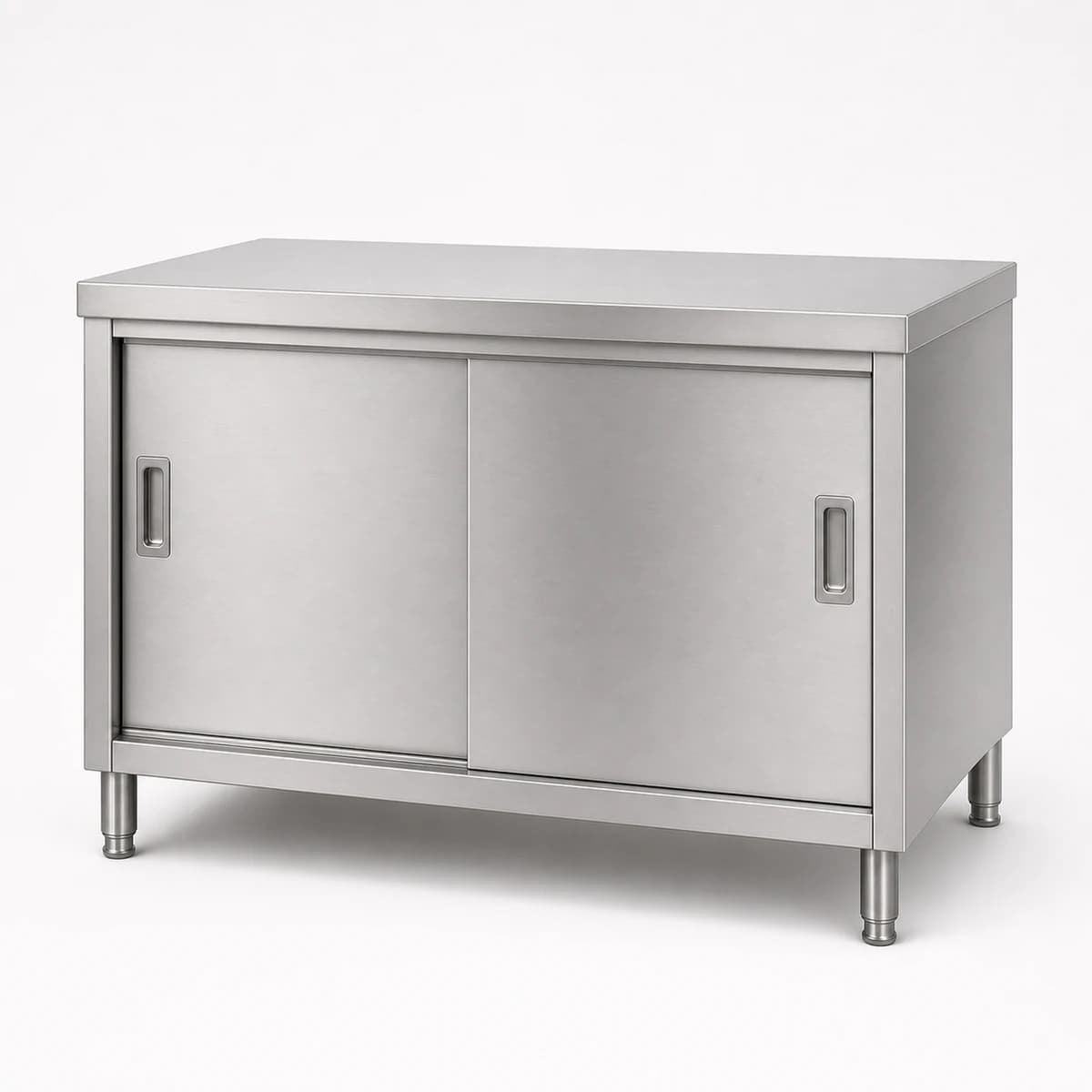
Stainless Steel Equipment
Stainless Steel Sliding Door Base Cabinet
Commercial stainless steel sliding door base cabinet for made-to-order kitchen projects.
View Details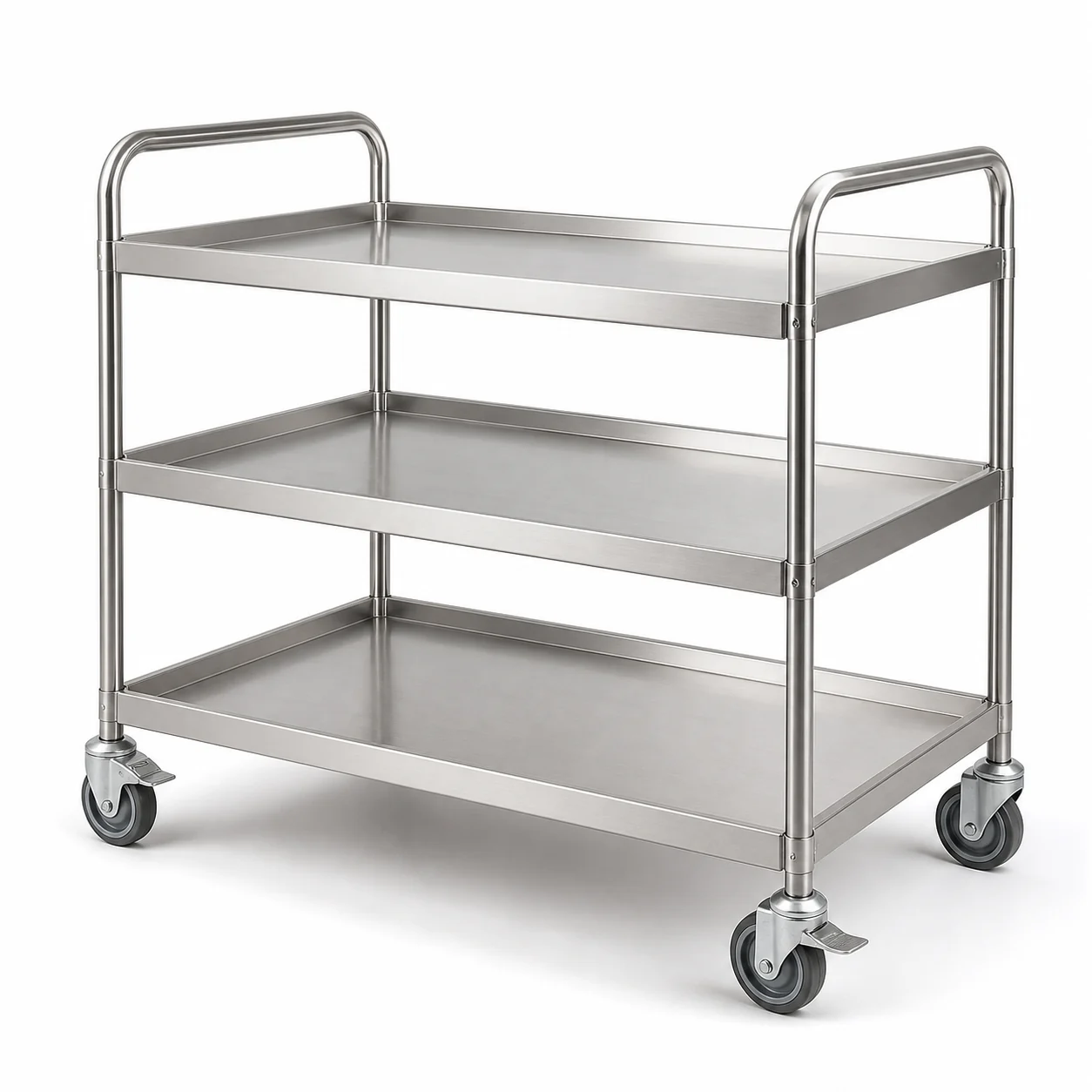
Stainless Steel Equipment
Stainless Steel Utility Trolley
Made-to-order stainless steel utility trolley for transport and organization in commercial kitchen workflows.
View DetailsRelated Solutions
Solution Pages Connected to This Article
FAQ
Common Questions
Is a work table or base cabinet better for food preparation?
Both can provide a preparation surface. A work table may suit frequent activity and open access, while a base cabinet may suit a fixed station that needs enclosed nearby storage. The suitable option depends on the workstation and project requirements.
What is the main advantage of an open-base work table?
An open-base table can make the lower area more visible and accessible for active preparation, temporary containers or routine checks. The actual benefit depends on the selected configuration and staff workflow.
When is a sliding-door base cabinet more suitable?
It may be suitable when a fixed workstation needs enclosed storage directly below the worktop, especially where outward-opening doors could conflict with circulation. Actual clearance and door operation should be checked for the project.
Are sliding doors better for narrow commercial kitchen aisles?
Sliding doors do not require outward swing space, which may help in some constrained layouts. They are not automatically suitable for every aisle; staff access, trolley movement, cabinet depth and adjacent equipment must be reviewed.
Can a work table and base cabinet be used in the same kitchen?
Yes. A project can use a work table for high-frequency preparation and a base cabinet where enclosed storage is useful at a fixed station. The combination should follow the intended workflow.
Should SUS304 or SUS201 be selected?
Material selection depends on the use environment, specific product and project requirements. It should not be decided by price alone; compare the options against the intended application.
Equipment Support
Need help selecting commercial kitchen equipment?
Share your kitchen type, product list, material or voltage requirements, destination country, and sourcing questions. SourcePro will review your inquiry and help organize suitable equipment directions.
Request a Quote